Wound Debridement
What is debridement, why does a diabetic foot wound need it, how is it done and when is caution required? Plain information on wound cleaning.
Short answer
Debridement is the removal of dead tissue, thick callus and debris from a wound. In a diabetic foot wound it is needed because this tissue blocks healing and gives bacteria a place to grow. The standard method is sharp debridement, done by a trained clinician with sterile instruments. In a foot with severely reduced blood flow, the circulation is assessed first.
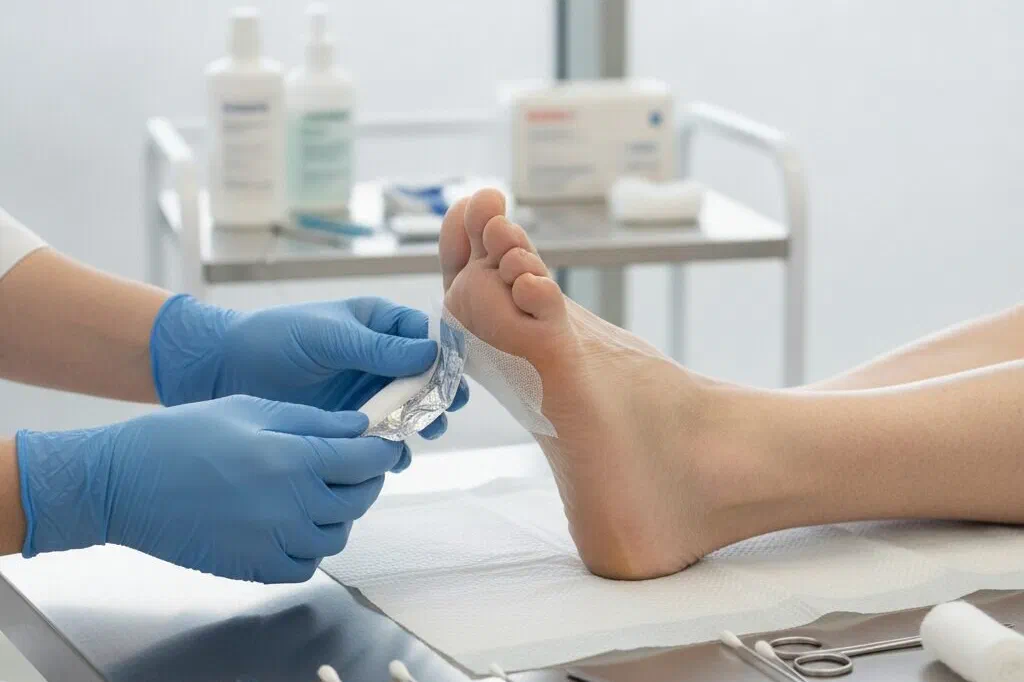
Debridement is the removal of dead tissue, yellow or green slough and thick callus from inside and around a wound. Many people call it "wound cleaning". The aim is not to enlarge the wound but to remove the tissue that blocks healing and expose the healthy tissue underneath. It is a basic step of diabetic foot wound care, usually combined with dressings, offloading and treatment of infection.
Why is wound cleaning needed?
Dead tissue does not recover and does not let the wound close. There are several reasons to remove it:
- It clears the way for healing: New tissue can only grow on a clean, living wound bed.
- It lowers the bacterial load: Dead tissue is a comfortable place for bacteria. Without cleaning, antibiotics alone may not be enough.
- It shows the true size of the wound: Under callus or a scab, the wound can be wider and deeper than it looks from outside.
- It reduces pressure: Thick callus around the wound adds extra load with every step.
- It allows a proper sample: When infection is suspected, a culture is taken from deep tissue after cleaning. A swab from the surface can be misleading.
Which methods are used?
International guidelines (IWGDF) recommend sharp debridement as the standard method for diabetic foot wounds. The other methods are not supported for routine use and may be considered only in particular situations.
| Method | How is it done? | When is it considered? |
|---|---|---|
| Sharp debridement | Dead tissue and callus are removed with a sterile scalpel, scissors or curette | The standard method. Usually done in the outpatient clinic |
| Surgical debridement | A wider cleaning in the operating theatre, under anaesthesia | Deep infection, abscess or extensive dead tissue |
| Autolytic (with moist dressings) | Under a suitable dressing, the body softens dead tissue by itself | In selected cases where sharp debridement is not suitable, as a slower option |
| Enzymatic | Ointments that dissolve dead tissue are applied | May be considered where sharp debridement cannot be carried out |
The choice depends on wound depth, infection, blood flow to the foot and pain, weighed together.
How is it done and what should you expect?
Sharp debridement is usually done in the examination or dressing room. First the wound is rinsed with saline. Then dead tissue and the surrounding callus are removed with sterile instruments until living tissue is reached. A little bleeding is expected and shows that living tissue has been reached. It usually stops with brief pressure.
After the procedure the wound is measured, photographed if needed, and covered with a dressing suited to its condition. If infection is suspected, a deep tissue culture may be taken at this stage. The clinician also checks whether the base of the wound reaches bone. If it does, bone infection is investigated.
Afterwards the wound may look wider and redder. This is usually not worsening, only the real state of the wound coming into view. Dead tissue and callus can form again, so debridement may be repeated at follow-up visits. Guidelines recommend that the clinician sets the frequency according to the wound's needs.
A wide or deep cleaning is carried out in the operating theatre by the relevant surgical team.
When is caution needed?
Debridement is not applied in the same way to every wound. Two points are weighed carefully:
Blood flow. If the leg arteries are seriously narrowed or blocked, the wound may not receive enough blood to heal after cleaning. For this reason, in people whose foot is cold, whose pulses cannot be felt or who have a dry black area on a toe, a vascular assessment comes first. Dry black tissue with clear edges and no signs of infection is usually watched without haste. Infection changes the picture. With an abscess or a spreading infection, cleaning is not delayed and is planned together with the vascular team.
Pain. In people with preserved sensation the procedure can hurt. A numbing cream, local anaesthetic or, if needed, a different method may be chosen.
In people taking blood thinners, bleeding may last a little longer. Tell your doctor which medicines you take, but do not stop any on your own.
Debridement is not a treatment on its own. If the person keeps walking on the wound, if blood flow is too low or infection is untreated, even the best cleaning may not work. We explain this on the non-healing foot wound page.
What can you do?
- Do not cut the wound, lift the scab or file the callus yourself.
- Do not use corn plasters, corn remedies or herbal mixtures.
- Change the dressing as you were shown, in clean conditions.
- Keep weight off the wound after the procedure too. Use the offloading device recommended to you.
- Bring a list of your medicines, especially blood thinners, to your appointment.
- Keep your blood sugar close to your doctor's target. High sugar slows healing.
- Photograph the wound at regular intervals. It helps to follow the change.
When is it urgent?
Assessment in Istanbul
Prof. Dr. Aytaç Çetinkaya is a specialist in Infectious Diseases and Clinical Microbiology. He assesses the infection side of the wound: is there an infection, how deep is it, which sample should be taken and which antibiotic is suitable? When a wide surgical cleaning is needed, the procedure is performed by orthopaedic, plastic surgery or general surgery teams. If blood flow is in doubt, he recommends asking for the opinion of vascular surgery or interventional radiology.
Patients from outside Istanbul or abroad can send a photo of the wound and their existing reports via WhatsApp and ask for a preliminary review. If you are unsure about a previous cleaning or a proposed operation, you can also ask for a second opinion. A preliminary review does not replace an examination.
Frequently asked questions
Is debridement painful?
Why does the wound look bigger after debridement?
Can I clean the wound myself at home?
How many times is debridement done?
Does every wound need debridement?
References
This page is for general information only and does not replace an examination, diagnosis or treatment. In an emergency, call your local emergency number or go to the nearest emergency department.