Offloading the Diabetic Foot
What is offloading and why is it essential for a diabetic foot ulcer? Casts, walker boots and other methods, and what the patient should watch for.
Short answer
Offloading means reducing the pressure on a foot wound with a special cast, boot or similar device. It is needed for diabetic wounds on the sole of the foot, because loss of feeling lets the person keep walking on the wound without noticing. Guidelines recommend knee-high devices that the patient cannot remove as the first choice. Ordinary shoes do not heal a wound on the sole.
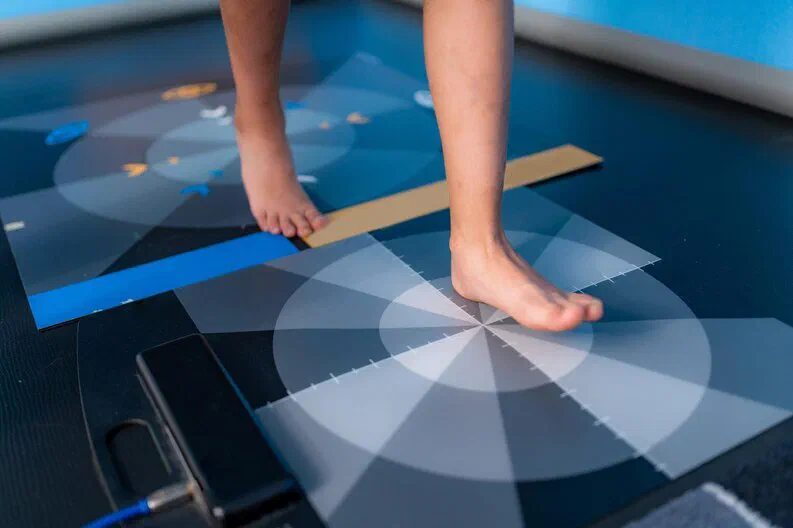
Offloading means reducing the pressure on a foot wound, or spreading it to other parts of the foot. It is done with tools such as a special cast, a walker boot, felt padding or insoles. It is one of the most important steps in diabetic foot wound care, and the one that most often falls short. However good the dressing, healing is delayed if the person keeps walking on the wound.
Why does it matter so much?
In a healthy foot a wound hurts, and the person naturally avoids stepping on it. In diabetes, nerve damage (neuropathy) reduces or removes this protective pain. Because the wound is not felt, the person keeps walking normally. With each step the body weight lands on the wound, the thin new tissue is crushed and the wound cannot close.
Most wounds on the sole form under bony points, where pressure is highest. The thick callus that builds up around them adds to the pressure. This is why offloading usually goes hand in hand with wound debridement.
When a wound on the sole has not closed for weeks, a first question is: has the load on the wound really been removed? See also the non-healing foot wound page.
Which methods are used?
For forefoot or midfoot wounds on the sole caused by nerve damage, international guidelines (IWGDF) recommend knee-high devices that the patient cannot remove as the first choice. Removable devices are considered when these are unsuitable or not tolerated.
| Method | Feature | When is it considered? |
|---|---|---|
| Total contact cast | A special knee-high cast that spreads pressure across the whole sole. Cannot be removed | One of the first choices for wounds on the sole in suitable patients |
| Walker boot made non-removable | A ready-made knee-high boot, secured so the patient cannot take it off | A first choice equivalent to the total contact cast |
| Removable boot (knee-high or ankle-high) | Can be taken off for dressing changes and checks | When a non-removable device is not suitable or not tolerated |
| Felt padding with suitable footwear | Felt is placed around the wound to spread the pressure | When the other devices are not available |
| Surgical offloading | Procedures that reduce pressure, such as tendon lengthening | In selected patients when devices have not worked |
Ordinary shoes and standard therapeutic shoes are not recommended for healing an open wound on the sole. Their place is in preventing recurrence after the wound has closed.
For wounds on top of a toe, on the side of the foot or on the heel, the approach changes. Depending on the location, footwear adjustments, toe spacers or removable devices may be used.
How is it applied and what should you expect?
Before a device is chosen, the wound's location, signs of infection and blood flow to the foot are assessed. A total contact cast is applied by a team experienced in this technique. The cast or boot is opened at set intervals so the wound can be checked, cleaned and re-dressed.
Walking with a knee-high device can feel unfamiliar at first. A height difference between the legs can be reduced with a raised shoe on the other foot. A walking stick, crutches or a frame may be recommended for balance.
Offloading continues until the wound is fully closed. Even then, the foot does not go straight back into ordinary shoes. Newly healed tissue is fragile, and the move to suitable footwear is made step by step.
Limits and risks
Not every method suits every patient. These points are weighed:
- Infection and circulation: When infection or poor circulation is marked, the priority is to address these problems. Because the wound needs to be seen often, a removable device is usually preferred.
- Risk of falls: In people with poor balance or poor eyesight, knee-high devices can increase the risk of falling.
- New wounds: A cast that is poorly fitted or has become loose can rub the skin and cause a new wound. With reduced feeling, this may go unnoticed.
- Daily life: Bathing, driving and sleeping can be harder with a non-removable device. Discuss these openly with the doctor.
The main weakness of removable devices is that they do not work unless they are worn.
What can you do?
- Use your device indoors too. Do not step barefoot or in slippers, even when getting up at night.
- Reduce how far you walk and how long you stand. Raise your foot when sitting.
- Take care that water, sand or small objects do not get inside the cast or boot.
- Check your other foot every day. The extra load can cause a wound there as well.
- If the device becomes loose, tight, rubs or is damaged, do not try to fix it yourself. Call your care team.
- Keep your appointments. The wound needs to be seen regularly.
Assessment in Istanbul
Prof. Dr. Aytaç Çetinkaya is a specialist in Infectious Diseases and Clinical Microbiology. He assesses the infection side of the wound and asks whether the load on the wound has been reduced enough. The state of the infection also affects which offloading method is safe. Casts and devices are applied by orthopaedic and physical medicine and rehabilitation teams. When surgical offloading is needed he recommends the opinion of orthopaedics or plastic surgery, and when blood flow is in doubt, that of vascular surgery or interventional radiology.
Patients coming from outside Istanbul or from abroad can send a photo of the wound, a picture of the device they use and their existing reports via WhatsApp and ask for a preliminary review. For a long-standing wound, you can also ask for a second opinion. A preliminary review does not replace an examination.
Frequently asked questions
My wound does not hurt. Do I still need to keep weight off it?
Why is a cast or boot that cannot be removed recommended?
Will a special diabetic shoe heal my wound?
Can I take the device off for short distances at home?
Is offloading suitable for every wound?
References
This page is for general information only and does not replace an examination, diagnosis or treatment. In an emergency, call your local emergency number or go to the nearest emergency department.