Foot Wound Smell, Discharge and Pus
A bad smell, pus or coloured discharge from a diabetic foot wound suggests infection. What it means, what to do at home and when it is urgent.
Short answer
A bad smell, pus or yellow-green discharge from a diabetic foot wound is usually a sign of bacterial infection. Even without pain, see a doctor within a few days, or the same day if there is fever or spreading redness. Do not start antibiotics on your own; the right medicine is chosen according to a culture taken from the wound.
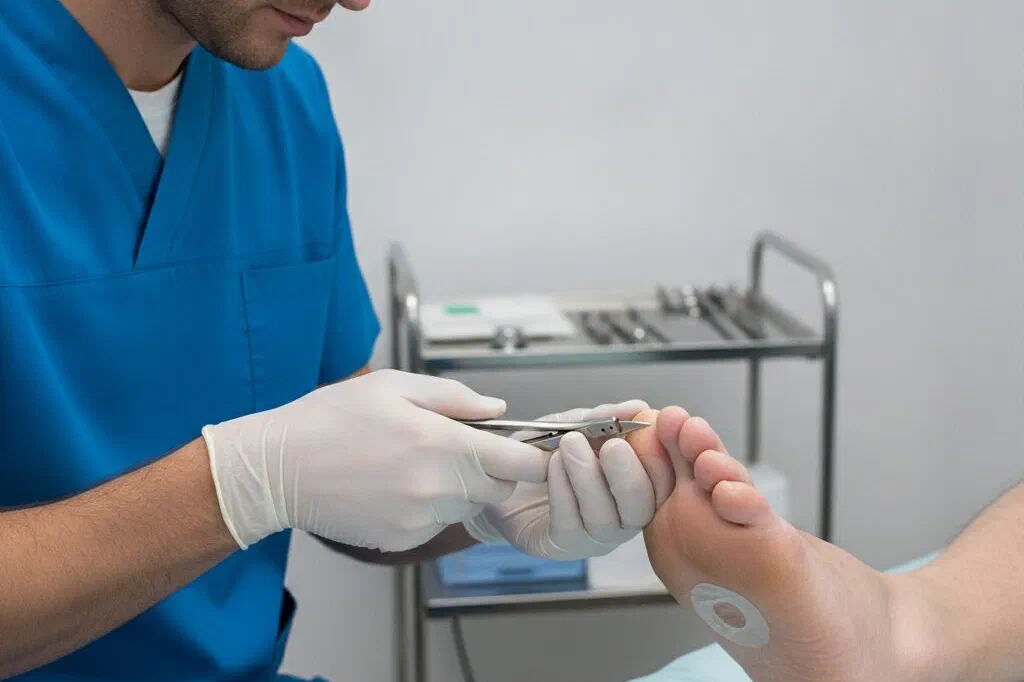
A bad smell, yellow-green discharge or pus from a diabetic foot wound are the most common signs of bacterial infection. People with nerve damage may feel no pain, which makes smell and discharge especially important clues. Often it is the patient's relatives who notice the smell first, or a stain is seen on the sock.
What does the appearance of the discharge tell you?
| Discharge | Possible meaning |
|---|---|
| Small amount, clear or pale yellow, no smell | Can be seen in a healing wound |
| Dark yellow, green or brown; thick | Suggests infection |
| Pus (thick, creamy) | Infection; there may be an abscess underneath |
| Bad, heavy smell | Infection and dead tissue; deep involvement is possible |
| Heavy discharge that quickly soaks the dressing | Deep infection or swelling from fluid (oedema); assessment is needed |
This table is only a guide. In a person with diabetes, a wound infection can be deeper than it looks from the outside.
Why does it matter?
In the diabetic foot, infection starts at the surface but can spread quickly, deeper and upwards, along the tendon sheaths and the compartments of the foot. An untreated infection can reach the bone or enter the bloodstream. The right treatment started early, on the other hand, can bring the infection under control with outpatient care in most cases.
First steps
- Gently wash the wound with clean drinking water or saline, and cover it with a clean, dry dressing.
- Do not start antibiotics on your own, and do not use old medicines you have at home.
- Do not squeeze the wound or try to drain the pus.
- Do not apply vinegar, cologne, tincture of iodine or herbal mixtures.
- Keep weight off the foot, and keep it raised while resting.
- Take a photo of the wound and the discharge, and note how often you change the dressing.
- Measure and record your temperature and your blood sugar.
What is done during the assessment?
- Examination: The size and depth of the wound, the width of the redness around it and whether it extends to the bone are checked.
- Culture: After the wound has been cleaned, a sample is taken from deep tissue. A swab taken from the surface can be misleading.
- Blood tests: Markers of infection, blood sugar, kidney function.
- Imaging: X-ray; MRI if a deep abscess or bone involvement is suspected.
- Circulation assessment: Pulses and, if needed, Doppler.
How is treatment planned?
- Wound cleaning: Dead tissue and pus are removed; if there is an abscess, it is drained. This step is as important as the antibiotic.
- Antibiotics: They are first started according to the likely bacteria and then adjusted according to the culture result. In mild infections, treatment by mouth may be enough; in severe cases it is given into a vein in hospital.
- Offloading and dressing: Weight is kept off the wound, and a dressing suited to the amount of discharge is chosen.
- Blood sugar control.
For details, see the diabetic foot infection page.
When should you come back?
Once treatment has started, the discharge and smell are expected to lessen within a few days. If they do not, if the redness is widening, if a fever develops or if new blackening appears, do not wait for your follow-up appointment.
Assessment in Istanbul
In wounds with discharge and smell, taking the right sample and choosing the antibiotic accordingly is directly the field of the Infectious Diseases and Clinical Microbiology specialty. Prof. Dr. Aytaç Çetinkaya assesses these patients in Istanbul. If there are no emergency signs, patients in Türkiye and international patients can send a photo of the wound, their reports and a short note on WhatsApp to ask for a preliminary review. A preliminary review does not replace an examination.
Frequently asked questions
Does a smelling wound always mean infection?
Is there a problem if the discharge is clear and has no smell?
Can I use the antibiotic I have at home?
Can I wash the wound with salt water, vinegar or cologne?
References
This page is for general information only and does not replace an examination, diagnosis or treatment. In an emergency, call your local emergency number or go to the nearest emergency department.