Foot Numbness and Loss of Feeling
Numbness, tingling and loss of feeling in the feet may point to diabetic nerve damage. Why wounds go unnoticed, and what to do at home and at the doctor.
Short answer
In a person with diabetes, numbness, tingling or reduced feeling in the feet is usually due to nerve damage, known as neuropathy. Its main importance is that wounds can go unnoticed because pain is dulled. Look at your feet every day, never walk barefoot, wear suitable shoes and have regular foot checks. If you see a wound, redness or swelling on a numb foot, see a doctor without waiting.
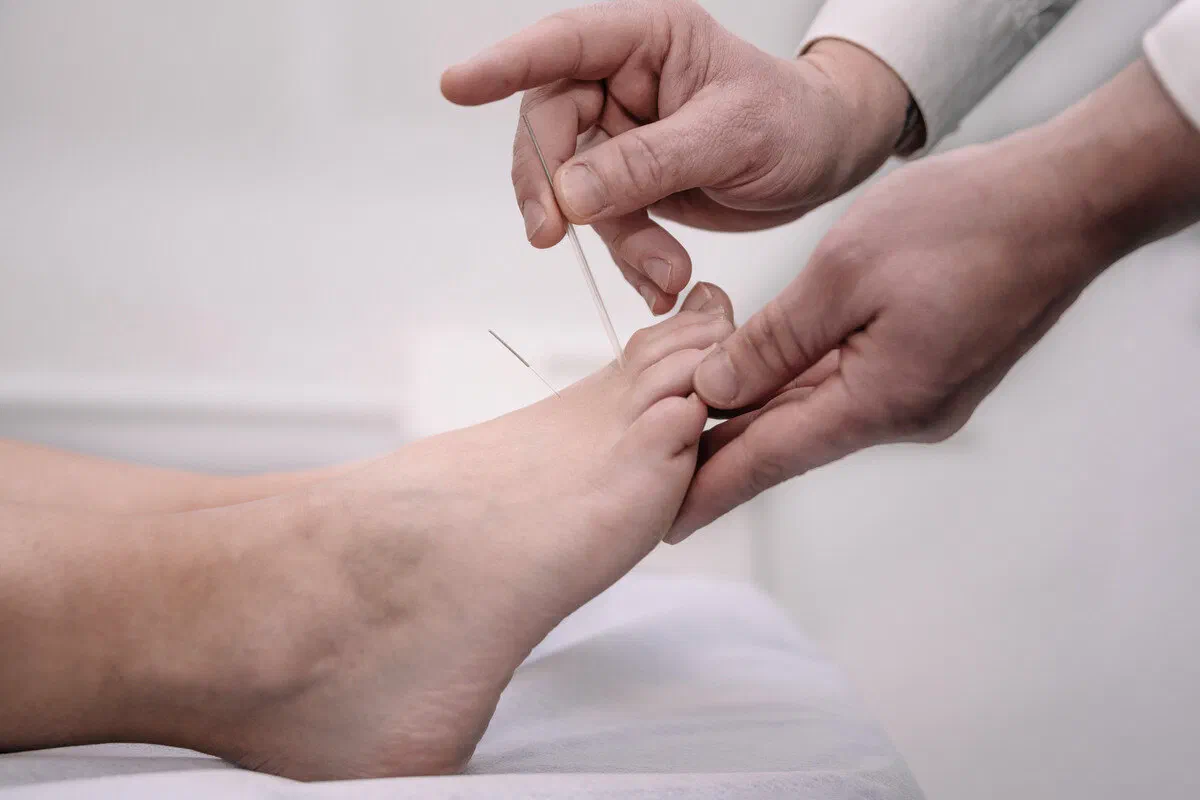
Numbness, tingling, burning or reduced feeling in the feet is the most common sign of the damage that diabetes can do to the nerves over many years, known as neuropathy. It usually begins in both feet at the tips of the toes and moves slowly upwards, which is why it is described as loss of feeling in a "stocking" pattern. The condition itself is not an emergency. However, when pain and touch are dulled, a small wound, blister or burn can grow without being noticed. Most diabetic foot wounds begin this way.
What signs should you look for?
| Sign | What it may mean |
|---|---|
| Numbness or tingling at the tips of the toes | May be an early stage of nerve damage |
| Burning, stabbing or electric shock feelings that are worse at night | Painful neuropathy, which can exist alongside loss of feeling |
| Feeling as if you are walking on cotton wool or sponge | Shows that touch and pressure sensation are reduced |
| Not noticing that a slipper has come off | Suggests protective sensation is clearly reduced |
| Not being able to tell hot from cold | The risk of burns is high |
| A painless callus, blister or wound | The foot's protective alarm is not working, and it should be assessed |
| Dry, cracked skin | Nerve damage also reduces sweating, and cracks can let germs in |
| Clawed toes or a change in foot shape | Pressure points form, and the choice of footwear matters more |
Diabetes is not the only cause of numbness. Vitamin B12 deficiency, thyroid disease, kidney failure, alcohol use, certain medicines and a slipped disc in the lower back can cause similar symptoms. If the numbness is in one foot only, or is progressing quickly, other causes should also be looked for.
At home, before and after you see a doctor
In a foot with reduced feeling, your eyes and hands take over the work the nerves can no longer do. The daily care that guidelines recommend consists of these steps:
- Look at your feet every day. Check the soles, heels and between the toes. If you cannot see them, use a mirror or ask a relative for help.
- Never walk barefoot. Wear shoes or closed slippers at home, on carpet, on the balcony and at the beach. Do not walk around in socks alone or in thin-soled slippers.
- Feel inside your shoes with your hand before putting them on. A stone, a folded insole or a raised seam can cause a wound without being noticed.
- Choose suitable shoes. A shoe should be slightly longer than your foot, wide enough not to squeeze the toes, and soft. Break in new shoes for short periods at a time.
- Wear seamless socks that are not tight, and change them every day.
- Wash your feet in lukewarm water and dry them well. Keep the spaces between the toes dry in particular. Apply moisturiser to dry skin, but not between the toes.
- Cut toenails straight across. Do not cut calluses, and do not use corn remedies or corn plasters.
- Keep away from heat sources. A hot water bottle, stove or heater can burn the foot without you noticing.
If you see a wound, blister, change in colour or new swelling on your foot, keep weight off that foot and see a doctor. You can also use the foot check page for a first look at your situation.

What does the assessment include?
- History: How long the symptoms have been present, how long you have had diabetes, blood sugar control, the medicines you take and any previous wounds.
- Monofilament test: Set points on the foot are touched with a 10 g nylon thread. Not feeling these points shows that protective sensation has been lost.
- Vibration and other sensory tests: Vibration sense is checked with a tuning fork, and touch and reflexes when needed.
- Inspection of the foot: The skin, nails, calluses, changes in shape, the spaces between the toes and your shoes are examined.
- Circulation: The foot pulses are felt by hand, and blood flow is measured with Doppler when needed.
- Blood tests: Blood sugar and the three-month sugar average, kidney function, and vitamin B12 and thyroid tests when needed.
At the end of this examination the risk level of your foot is determined, and the frequency of checks is planned accordingly.
How is it managed?
- Blood sugar control: Good control may slow the progress of nerve damage.
- Protection: Depending on the risk level, suitable shoes are advised, with custom insoles or therapeutic footwear when needed.
- Regular foot care: Having calluses and nail problems looked after by a health professional trained in foot care helps prevent wounds.
- Treating painful symptoms: A doctor can prescribe suitable medicines for burning and stabbing pain. These ease the symptoms. They do not bring feeling back.
- If a wound has developed: Wound care and offloading begin without delay. For wounds that do not close, see the page on non-healing foot wounds.
Assessment in Istanbul
The diagnosis and long-term follow-up of loss of feeling are usually carried out by the doctor who manages your diabetes and by neurology. Prof. Dr. Aytaç Çetinkaya, a specialist in Infectious Diseases and Clinical Microbiology, assesses whether a wound that has developed on a foot with reduced feeling is infected, and recommends working with endocrinology, neurology, orthopaedics or vascular surgery when needed. If you have noticed a wound, redness or swelling on a numb foot, you can send a photo of the foot and any reports you have via WhatsApp for a preliminary review. A preliminary review does not replace an examination. If there are urgent signs, do not wait for a reply to your message.
Frequently asked questions
My foot is numb but I have no pain. Is that a good sign?
What is the monofilament test?
Can the feeling come back?
How often should I have a foot check?
Can I soak a numb foot in hot water or warm it by a heater?
References
This page is for general information only and does not replace an examination, diagnosis or treatment. In an emergency, call your local emergency number or go to the nearest emergency department.