Negative Pressure Wound Therapy
Negative pressure (vacuum) wound therapy in the diabetic foot: who it is considered for, who it is not, how it is applied and what to watch for.
Short answer
Negative pressure wound therapy uses a small pump to apply gentle, continuous suction to a sealed dressing placed over the wound. In the diabetic foot it is an add-on, not a treatment on its own, and guidelines suggest considering it mainly for wounds left open after surgery. It is not started until infection, dead tissue and poor blood flow have been dealt with. The team that sees the wound decides whether it suits you.
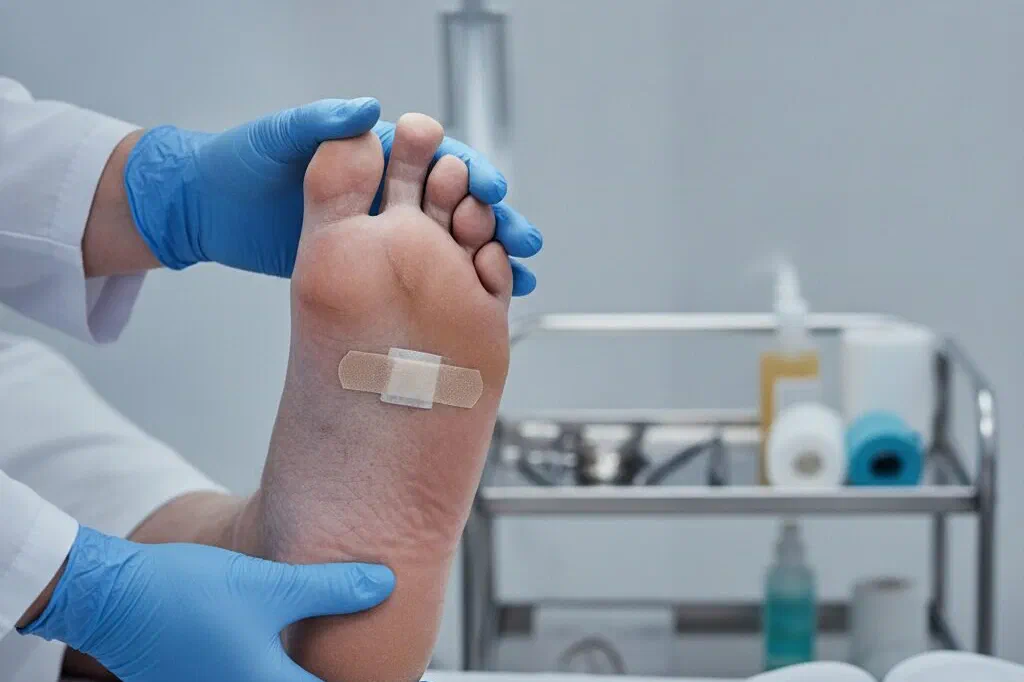
Negative pressure wound therapy is often called vacuum therapy or "VAC". A special foam or gauze is placed in the wound, covered with a thin airtight film and connected by a tube to a small pump. The pump applies gentle, controlled suction to the wound. This draws away excess fluid, may reduce swelling around the wound and can support the growth of healthy, pink tissue in the wound bed.
The key point is this: vacuum therapy is an add-on. It does not replace wound cleaning, treatment of infection, restoring blood flow, keeping weight off the foot or blood sugar control. If these basic steps are missing, the device alone will not close the wound.
Who is it considered for?
International guidelines (IWGDF 2023) suggest considering negative pressure wound therapy in addition to standard care for diabetic foot wounds that are left open after surgery. Typical examples are:
- A wide, deep wound that remains after an abscess has been drained or infected tissue has been surgically removed
- A surgical wound left open after a toe or part of the foot has been removed
- A wound that produces a lot of fluid after surgical cleaning and is hard to manage with ordinary dressings
In these situations, vacuum therapy may help the wound become smaller and either close or become ready for a second closing procedure.
Who is it not used for, or delayed in?
Guidelines do not recommend vacuum therapy as a routine first treatment for diabetic foot wounds that have not been operated on. For these wounds the priorities are good wound care, offloading and correcting the underlying cause. In addition, vacuum therapy is not started until the following have been addressed:
| Situation | Why wait? |
|---|---|
| Untreated infection or an undrained abscess | Infection can progress under a sealed dressing and be noticed late |
| Dead tissue in the wound | It needs to be removed first, as healthy tissue does not grow over dead tissue |
| Untreated bone infection | Treatment aimed at the bone is planned first |
| Poor blood flow to the foot | A wound without blood supply will not heal with suction either, so circulation is assessed first |
| Exposed blood vessels in the wound or a tendency to bleed | The risk of bleeding may rise, and the decision is made with the surgical team |
If you take blood thinners, be sure to tell the team. This does not mean vacuum therapy cannot be used, but closer follow-up may be needed.
How is it applied and what should you expect?
- Preparation: The wound is cleaned, dead tissue is removed, and the team confirms that infection is under control and blood flow is adequate.
- Placing the dressing: Foam cut to the shape of the wound is placed inside it, covered with a clear film, and the tube is connected to the device.
- Running the device: When the pump is switched on, the foam shrinks and the dressing becomes firm. This is expected. The fluid collects in a canister on the device.
- Dressing changes: The dressing is changed at intervals set by the team, usually every few days. The wound is reassessed at each change.
- Stopping: When the wound has become small enough or is ready for closure, vacuum therapy is stopped and a suitable dressing is used instead. If the expected improvement is not seen, the treatment is reviewed.
Keeping weight off the foot remains important throughout. Walking on the wound because a device is attached can undo the healing that has been gained. How long the treatment lasts varies from wound to wound, and at each dressing change the team decides whether to continue by checking whether the wound is getting smaller.
Limits and risks
Vacuum therapy does not work for every wound and does not guarantee closure. Possible problems include:
- Irritation of the skin around the wound, or softening from moisture
- Pain or slight oozing of blood during dressing changes
- Infection flaring up again under the sealed dressing
- Air leaks in the dressing, with the device sounding an alarm
- Restricted movement and a risk of falls because of the device and tubing
Most of these problems are easy to solve when noticed early. That is why regular checks are part of the treatment.
What can you do?
- Keep the device running for as long as the team has told you. Do not switch it off on your own decision.
- Do not open, cut or add tape to the dressing. If there is a problem, call the team.
- Look at the amount and colour of the fluid in the canister once a day.
- Keep weight off the foot. Use the shoe, boot or crutches you have been given.
- Measure your blood sugar regularly and write it down.
- Clear walkways at home so you do not trip over the tubing, and secure the device beside the bed at night.
- Do not miss follow-up appointments.
To understand why a wound is not closing, see the page on non-healing foot wounds. For the infection side, see diabetic foot infection.
Assessment in Istanbul
The first question to answer before vacuum therapy is whether there is active infection or bone involvement in the wound. Prof. Dr. Aytaç Çetinkaya, a specialist in Infectious Diseases and Clinical Microbiology, assesses the infection side of the wound, plans antibiotic treatment and recommends that the decision on vacuum therapy is made together with the surgical and wound care team following the wound. If vacuum therapy has been proposed to you, or if the wound is not closing despite a long period of vacuum therapy, you can ask for a second opinion. You can send a photo of the wound, along with any culture and imaging reports, via WhatsApp for a preliminary review. A preliminary review does not replace an examination.
Frequently asked questions
Is vacuum therapy used for every diabetic foot wound?
Does vacuum therapy treat infection?
Is vacuum therapy painful?
Can I stay at home with the device?
What should I do if the device alarms or the dressing comes loose?
References
This page is for general information only and does not replace an examination, diagnosis or treatment. In an emergency, call your local emergency number or go to the nearest emergency department.